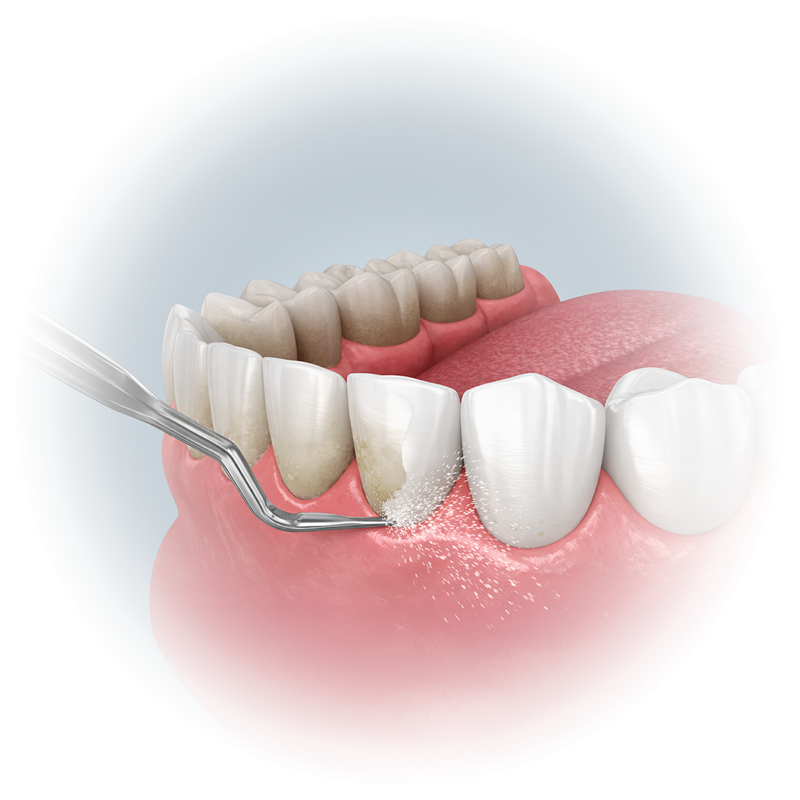
Why Tartar Forms
Tartar develops from plaque that has not been removed. When plaque remains on the surface of the teeth for a longer period of time, it begins to harden and turns into a solid deposit.
The most common cause is insufficient dental hygiene at home, skipping interdental cleaning, or using an incorrect technique.
Can Tartar Be Removed at Home?
In its early stage, yes. If plaque is caught in time, it can be removed through thorough mechanical cleaning and the use of proper dental hygiene tools.
However, if the tartar is heavily built up, professional treatment is necessary.
How to Proceed Safely
Never use sharp metal objects or excessive force. A safe approach includes:
- regular softening of plaque
- gentle mechanical cleaning
- using a high-quality dental hygiene set
- consistent prevention
Modern home technologies, such as advanced attachments or oral irrigators, can significantly reduce the risk of tartar formation.
Most Common Mistakes
A frequent mistake is applying too much pressure while cleaning, ignoring bleeding gums, or maintaining irregular home dental hygiene. These factors can actually make the condition worse.
How to Prevent Tartar From Returning
Prevention is the most effective approach. Regular home dental hygiene, a high-quality dental care set, and thorough interdental cleaning significantly reduce the risk of recurrence.
What matters most is long-term consistency.
Removing tartar at home is only possible in its early stage. The foundation is proper prevention and regular use of suitable dental hygiene tools.
For more information about our products, visit the LACLEVER e-shop.


office adress:
LACLEVER s.r.o.
Křemencova 17
110 00 Praha 1
e-mail: contact@laclever.com
billing information:
LACLEVER s.r.o.
Příkop 834/4
602 00 Brno-Zábrdovice
IČO: 26457539
DIČ: CZ26457539
EORI ID: CZ26457539
B2B
B2C
- Bank: Raiffeisen bank
- Account: 522288822/5500
- IBAN:
CZ45 5500 0000 0005 2228 8822 - SWIFT: RZBCCZPP
B2C
- Bank: Raiffeisen bank
- Account: 2224442202/5500
- IBAN:
CZ72 5500 0000 0022 2444 2202 - SWIFT: RZBCCZPP